

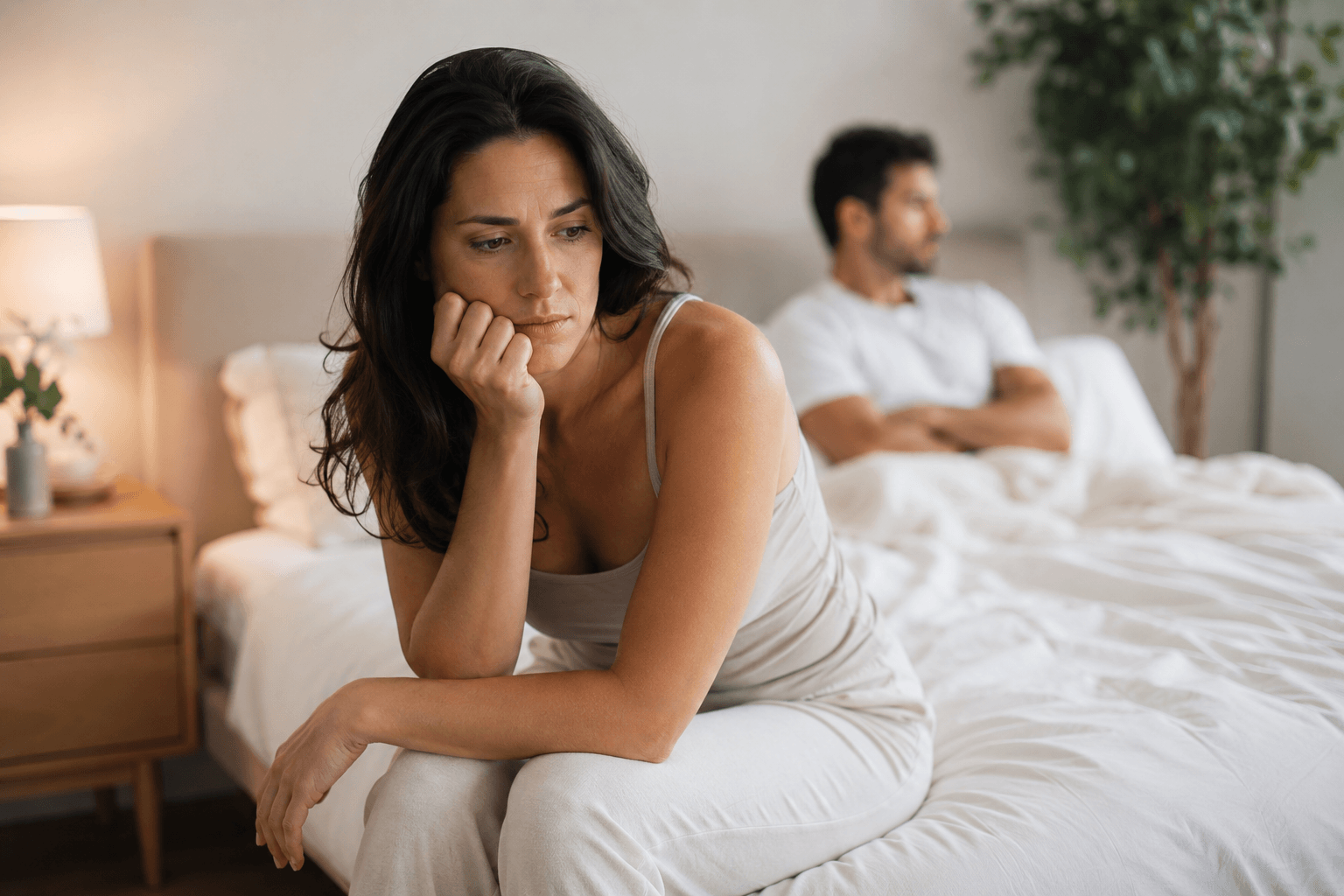
If sex has quietly moved to the bottom of your priority list, you are far from alone. One month you feel like yourself, and the next, intimacy feels like one more thing on a to-do list you have no energy for. Most people assume this is just a normal part of getting older, a busy schedule, or a rough patch in a relationship. Sometimes it is. But often, a dip in desire is your body sending a very specific signal, and that signal usually traces back to hormones.
At Body Lounge Park Cities, we talk to patients across Dallas, University Park, and Highland Park every week who describe the same frustrating pattern. They eat well, they exercise, their relationship is fine, and yet low libido persists. Understanding why this happens is the first step toward actually fixing it, rather than just living with it.
What Counts as Low Libido, and When Should You Be Concerned?
Sex drive naturally rises and falls throughout life. Stress, sleep, medications, and even the seasons can shift how interested you feel. Low libido becomes a concern when the change is persistent, noticeable to you or your partner, and starts affecting your confidence or relationship.
How Do You Know If It Is Hormonal or Just Stress?
Stress-related dips in desire tend to improve once the stressful period passes. Hormonal low libido tends to stick around, layering in with other symptoms like fatigue, brain fog, weight gain around the midsection, sleep disruption, or mood changes. If you notice several of these showing up together, hormones are worth investigating before assuming it is purely psychological.
What Actually Causes Low Libido?
Can Declining Testosterone Affect Both Men and Women?
Testosterone is often thought of as a male hormone, but women produce it too, and it plays a real role in desire for both sexes. In men, testosterone naturally declines with age, sometimes starting as early as the mid-30s. In women, testosterone and estrogen both shift during perimenopause and menopause, often years before a woman expects "the change" to begin.
Does Menopause and Perimenopause Play a Role?
Yes, and this is one of the most common reasons women in Dallas and Dallas County reach out to us. Declining estrogen can cause vaginal dryness, which makes intimacy physically uncomfortable, on top of reducing desire itself. Many women describe feeling like their body simply stopped responding the way it used to, which is a very real physiological shift rather than something to push through.
Can Thyroid Problems Lower Sex Drive?
An underactive thyroid slows down nearly every system in the body, including the ones responsible for arousal and energy. Fatigue, weight gain, and low mood often accompany thyroid-related libido loss, which is why isolated symptoms rarely tell the full story.
What Role Does Chronic Stress and Cortisol Play?
When cortisol stays elevated for long stretches, the body deprioritizes reproductive hormones in favor of managing perceived threats. This is a survival mechanism, but in modern life, where stress rarely lets up, it can leave libido suppressed for months or years without anyone realizing why.
Can Medications Be the Hidden Cause?
Certain antidepressants, blood pressure medications, and birth control formulations are known to reduce sex drive as a side effect. If your libido changed noticeably after starting a new prescription, that timing is worth mentioning to a provider rather than dismissing as coincidence.
What Are the Warning Signs You Shouldn't Ignore?
Is Low Libido Ever a Sign of Something More Serious?
Occasionally, yes. Sudden or severe changes in desire paired with symptoms like unexplained weight changes, persistent fatigue, hair thinning, or mood instability can point to a hormonal imbalance that deserves a closer look through lab testing rather than guesswork.
Should You Talk to a Provider About This?
If low libido has lasted more than a few months, if it is causing distress in your relationship, or if it is joined by fatigue, weight gain, or sleep issues, it is reasonable to seek a professional opinion. This is a medical topic, not a character flaw, and it deserves the same attention you would give any other symptom that has stuck around.
How Is Low Libido Treated?
Can Hormone Replacement Therapy Help Restore Desire?
For many patients, hormone replacement therapy is where real change begins. Bioidentical hormone replacement therapy, often shortened to BHRT, works by restoring hormone levels closer to what your body produced before age, stress, or menopause shifted the balance. Because it is customized based on lab work rather than a one-size-fits-all dose, treatment can be adjusted specifically to your symptoms and goals.
At our Park Cities location, hormone therapy typically begins with comprehensive lab testing to identify exactly which hormones are out of range. From there, a personalized plan may include testosterone, estrogen, or progesterone support, depending on what your body actually needs. You can learn more about how this process works on our hormone replacement therapy page.
What Does the Recovery and Results Timeline Look Like?
Most patients notice improvements in energy and mood within the first few weeks, with changes in libido often following as hormone levels stabilize over one to three months. Because BHRT is dosed to your individual lab results, adjustments along the way are normal and expected, not a sign that something is wrong.
Are There Other Supporting Treatments Worth Considering?
Some patients pair hormone therapy with peptide therapy to support energy, recovery, and overall wellness alongside their hormonal treatment plan. Others benefit from addressing related concerns directly, such as exploring options on our sexual wellness concerns page or reviewing symptoms tied to hormonal imbalance.
Who Is a Good Candidate for Hormone Therapy?
Adults experiencing a persistent, unexplained drop in libido, especially alongside fatigue, weight changes, or mood shifts, are often good candidates for a hormone evaluation. The only way to know for certain is through lab testing, which is why we start every hormone consultation there rather than assuming a treatment path in advance.
Why Choose a Local Provider in Park Cities for Hormone Therapy?
Hormone therapy is not a supplement you pick up off a shelf. It requires lab work, an experienced provider who can interpret those results correctly, and ongoing monitoring to make sure your plan continues to fit your body as it changes. Patients throughout Park Cities, University Park, Highland Park, and greater Dallas choose Body Lounge because our approach starts with real diagnostics, not guesswork, and continues with a team that adjusts your plan as your results come in.
A Refreshingly Honest Wrap-Up
Low libido is not something to quietly accept as an inevitable part of getting older. It is frequently your body flagging a hormonal shift that has a clear, evidence-based path forward. If any of this sounds familiar, whether it is the fatigue, the weight changes, or simply feeling like your old self has gone missing, a conversation with our team is a good place to start. This page was updated in August 2026 to reflect our current approach to hormone therapy and patient care.
Frequently Asked Questions
Is low libido a normal part of aging? Some decline in desire is common with age, but a significant or sudden drop is often linked to a treatable hormonal imbalance rather than something you simply have to accept.
How do I know if my low libido is hormone related? If it is joined by fatigue, weight gain, low energy, sleep changes, or mood shifts, hormones are a likely factor, and lab testing can confirm which ones are out of range.
How long does hormone replacement therapy take to work for libido? Many patients notice energy and mood improvements within a few weeks, with libido changes typically following over one to three months as hormone levels stabilize.
Is hormone therapy safe? Bioidentical hormone replacement therapy is dosed based on individual lab results and monitored by a provider, which allows treatment to be adjusted specifically to your needs and response.
Do I need to be in menopause to consider hormone therapy? No. Men and women experiencing hormonal decline outside of menopause, including perimenopause or age-related testosterone decline, may also benefit from an evaluation.
Ready to understand what is really behind your low libido? Schedule a hormone consultation with our Park Cities team and start with real answers instead of guesswork.